A Dish That Brings Ethiopia to the Table
Rich, deeply spiced and traditionally served with injera, doro wat is one of Ethiopia’s best-known dishes. It is closely associated with festive meals, including Ethiopian Orthodox Christmas (Genna) and Easter (Fasika). Its rich sauce begins with onions, spices and patience.
What Is Doro Wat?
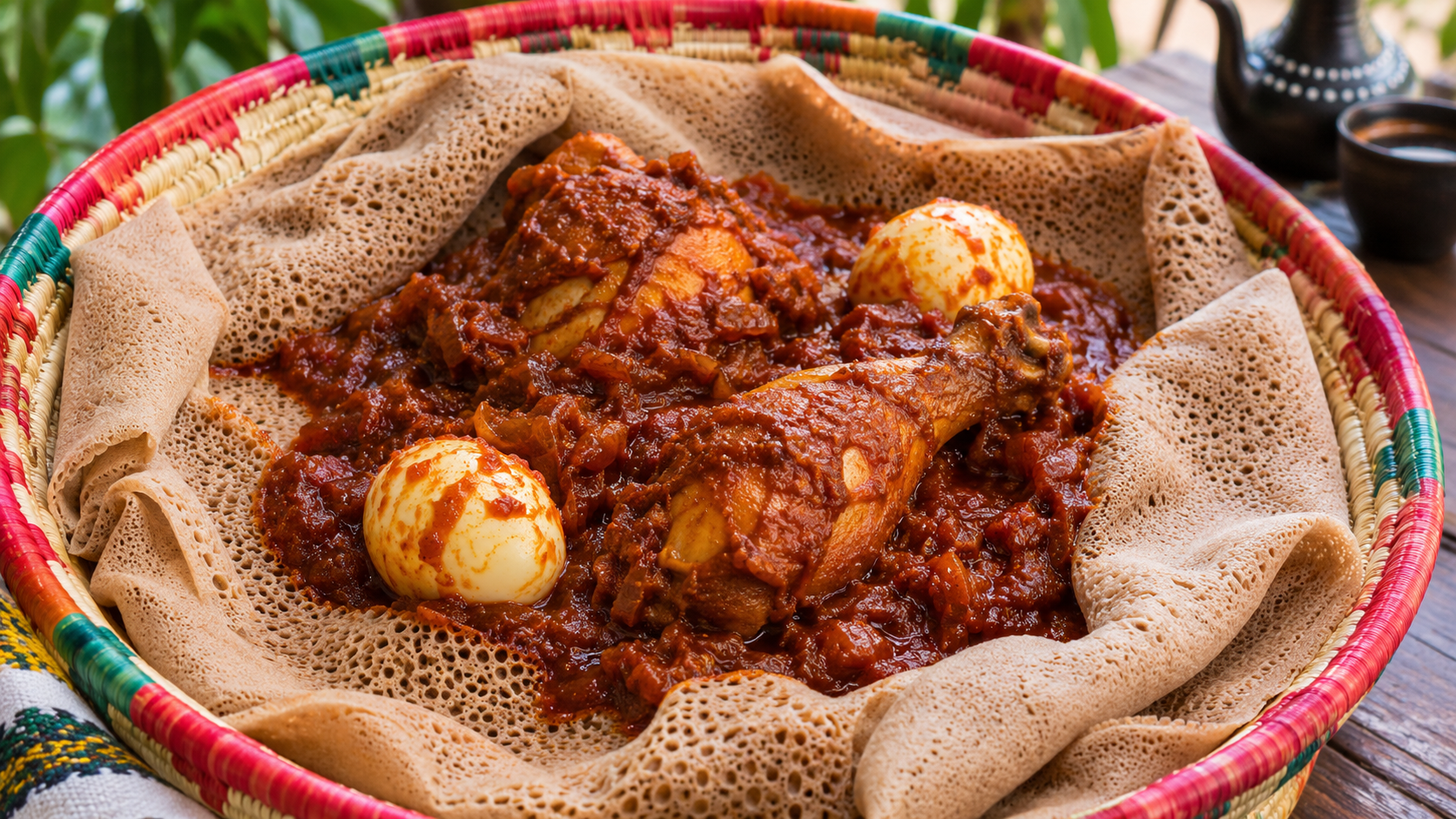
Doro wat is a traditional Ethiopian chicken stew prepared with plenty of onions, berbere spice blend and seasoned clarified butter known as niter kibbeh. It commonly includes bone-in chicken pieces and hard-boiled eggs.
Slowly cooking finely chopped onions develops the base for a thick, richly flavoured reddish sauce.
The Secret Ingredient: Berbere
Berbere is one of Ethiopia’s most distinctive spice blends. Recipes vary, but it often includes dried chillies and aromatics such as fenugreek, coriander, ginger and garlic. The blend gives doro wat its warmth, heat and colour.
What Is Niter Kibbeh?
Niter kibbeh is clarified butter infused with spices and aromatics such as cardamom, fenugreek, garlic or ginger. Plain clarified butter or ghee can substitute in this recipe, with a milder flavour.
A Home-Style Doro Wat Recipe
Serves: 4–6. Prep: 25 minutes. Cook: About 90 minutes.
Ingredients
- 1.2 kg bone-in chicken pieces
- 4 large onions, finely chopped
- 4 tablespoons niter kibbeh
- 3 tablespoons berbere, adjusted to taste
- 4 garlic cloves, crushed
- 1 tablespoon grated ginger
- 2 tablespoons tomato paste (optional)
- 400–600 ml chicken stock or water, added gradually as needed
- 4–6 hard-boiled eggs, peeled
- Salt to taste
- Injera for serving
Step 1: Cook the Onions
Place the chopped onions in a heavy-bottomed pot over medium-low heat. Cook gently for 20–30 minutes, stirring frequently. The onions can start cooking without fat. If they stick, loosen them with a small splash of water. By the end they should be very soft and concentrated.
Step 2: Add the Butter and Spices
Stir in the niter kibbeh, garlic, ginger and berbere. Cook for several minutes, stirring so the spices don’t burn. Add the tomato paste if using.
Step 3: Add the Chicken
Turn the chicken pieces in the seasoned onion mixture to coat them. Pour in just enough stock or water to loosen the mixture into a thick sauce.
Step 4: Simmer Slowly
Partially cover the pan and simmer gently for 40–60 minutes, depending on the size of the chicken pieces. Stir occasionally and add a splash of liquid if the sauce gets too thick. Use a thermometer to check that the thickest part of the chicken, away from the bone, reaches 75°C for at least 30 seconds.
Step 5: Add the Eggs
Lightly score the peeled hard-boiled eggs and add them to the stew. Simmer for another 5–10 minutes so the eggs are coated in sauce. Taste and adjust the salt.
Step 6: Serve With Injera
Serve with injera, a soft, fermented flatbread with a slightly sour flavour, commonly made with teff. Tear off pieces of injera to scoop up the chicken and its sauce.
Why Is Doro Wat Important in Ethiopian Culture?
Doro wat is associated with hospitality, family gatherings and festive meals. The slow cooking takes time, and in many households the recipes and techniques are passed down through generations. Served with injera, the stew lends itself to sharing at the table.
Is Doro Wat Very Spicy?
The heat depends on the berbere blend and how much you use. If yours is particularly hot, start with less and adjust to taste. Give the spices time to cook in the onion and butter base for a rounded flavour.
Experience the Flavours of Ethiopia
The sweetness of slowly cooked onions, the heat of berbere and the tang of injera each bring something to the dish. Have you tried Ethiopian doro wat? Share how you like to serve it in the comments.
Further reading: Food Standards Agency guidance on cooking food safely.